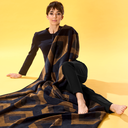

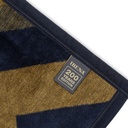
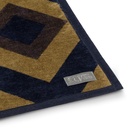
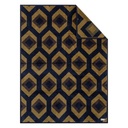

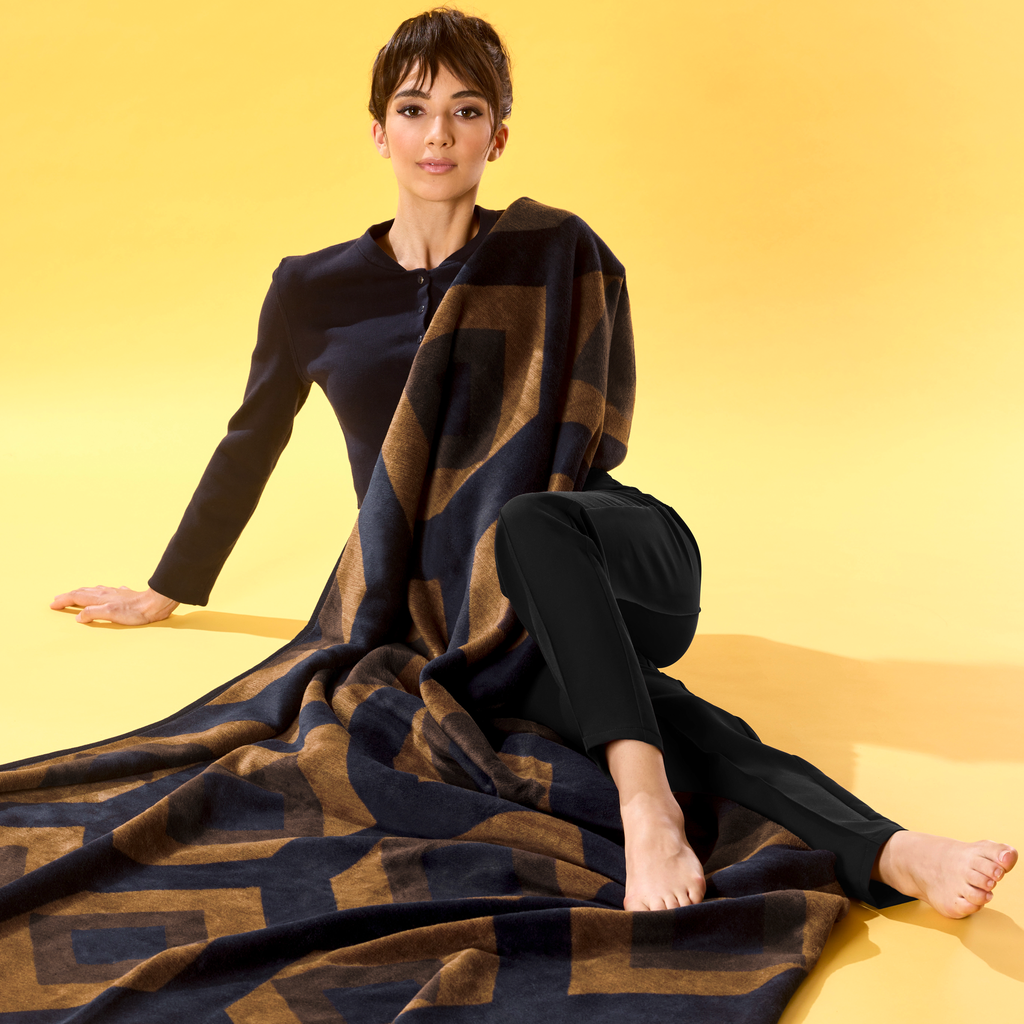
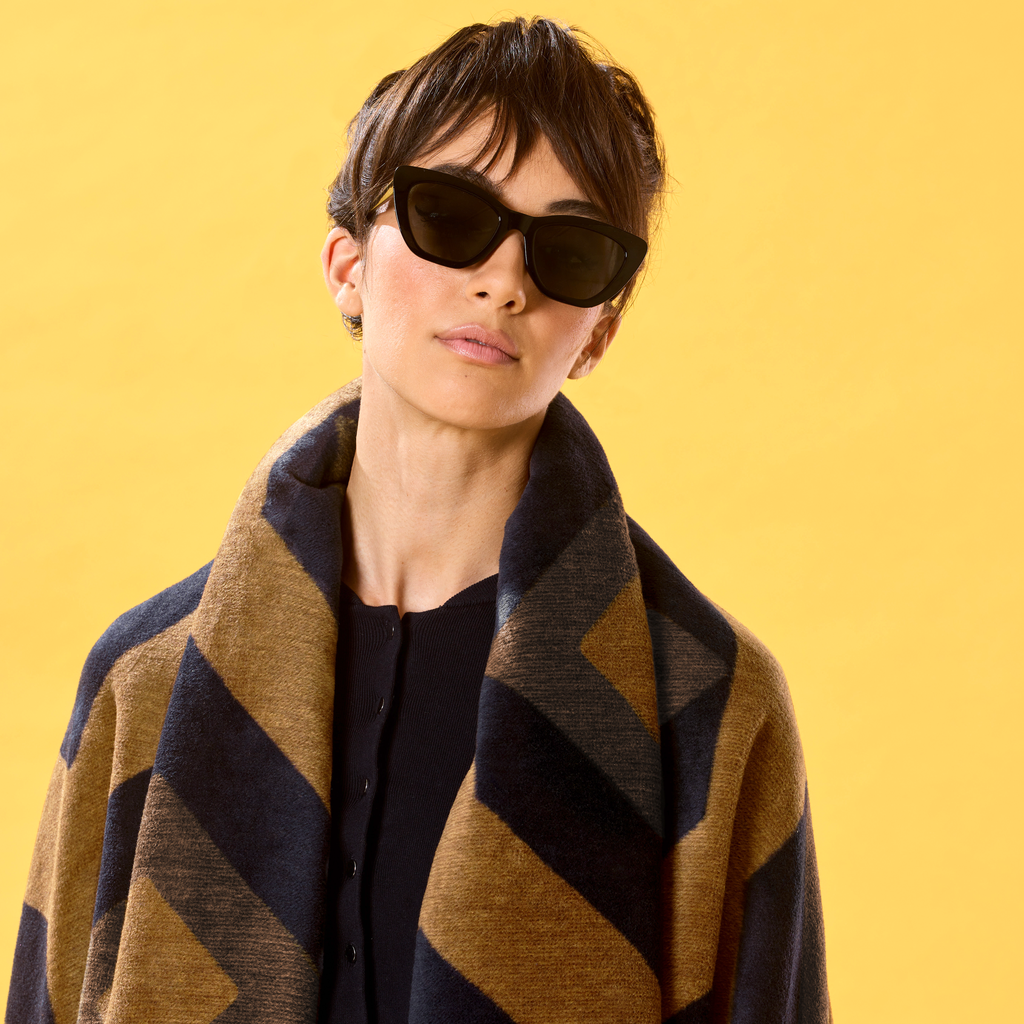
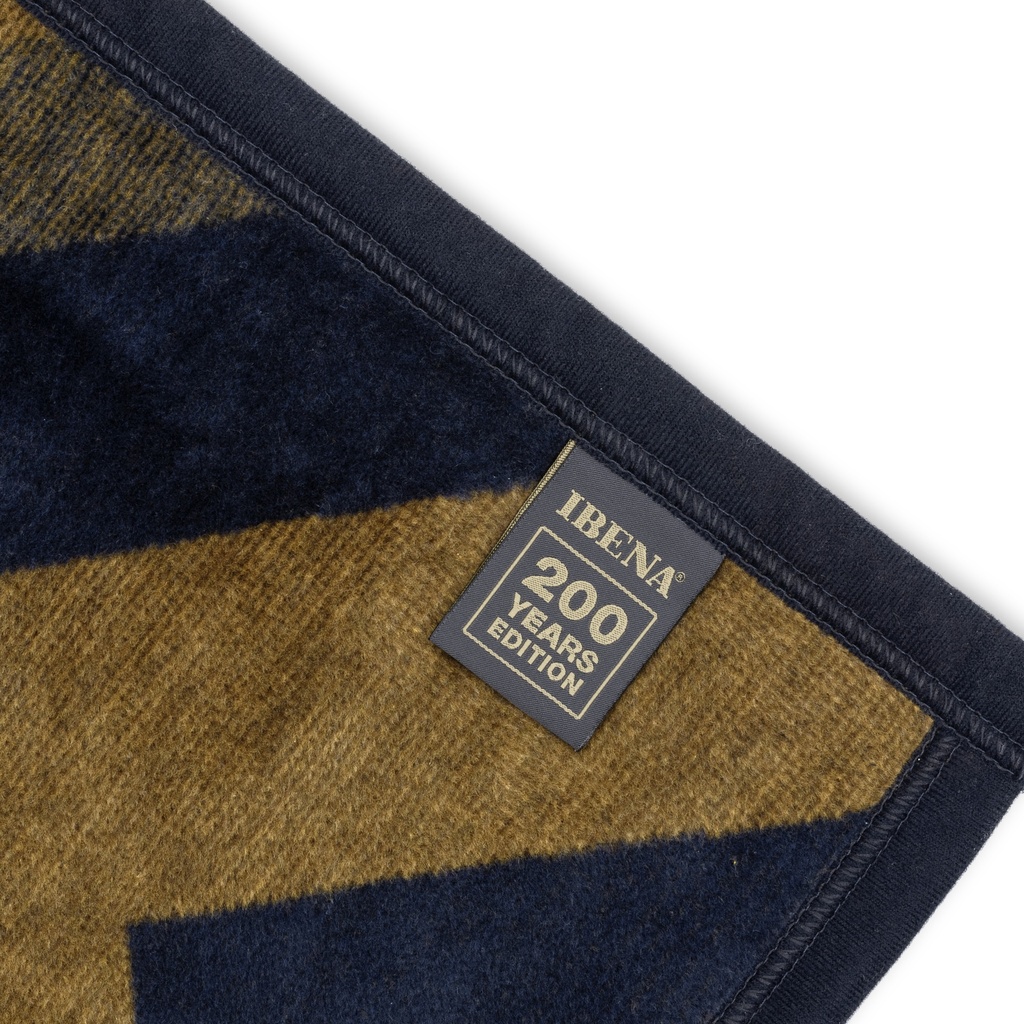
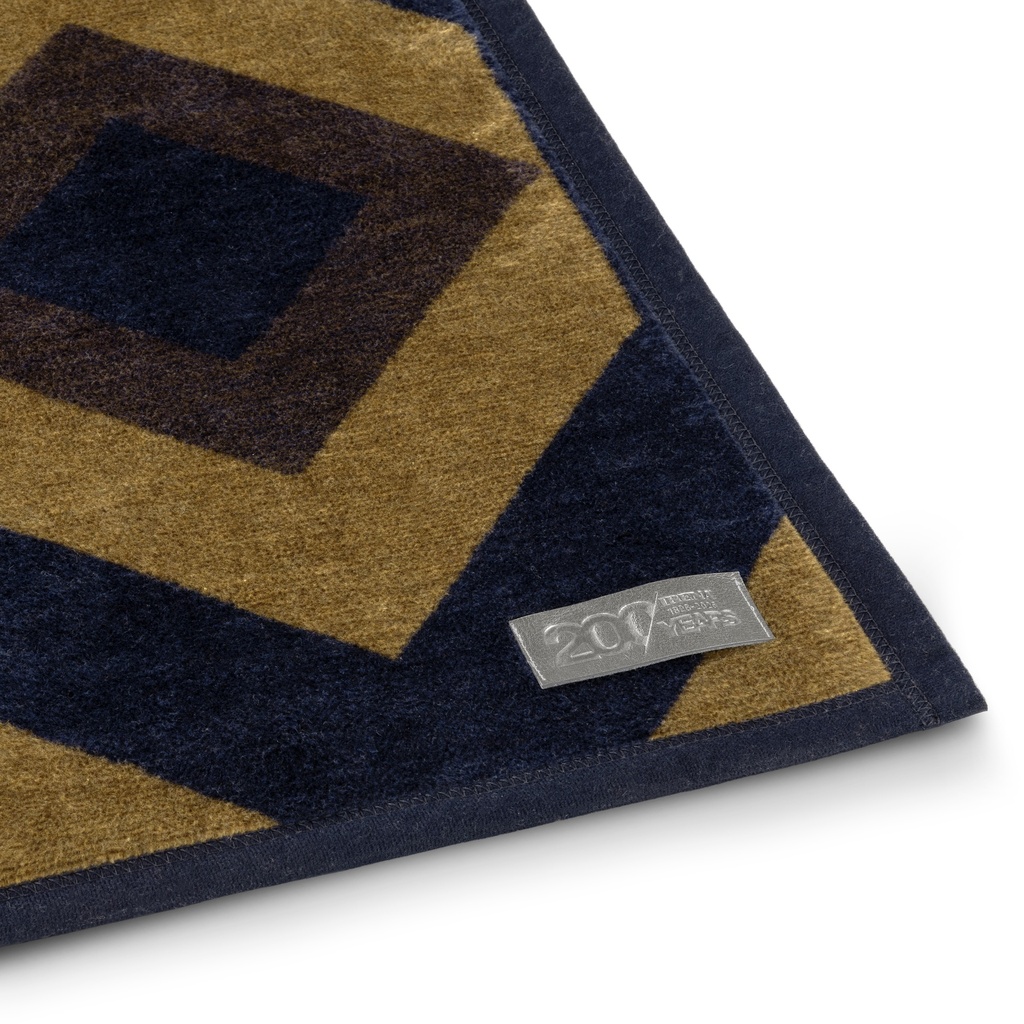
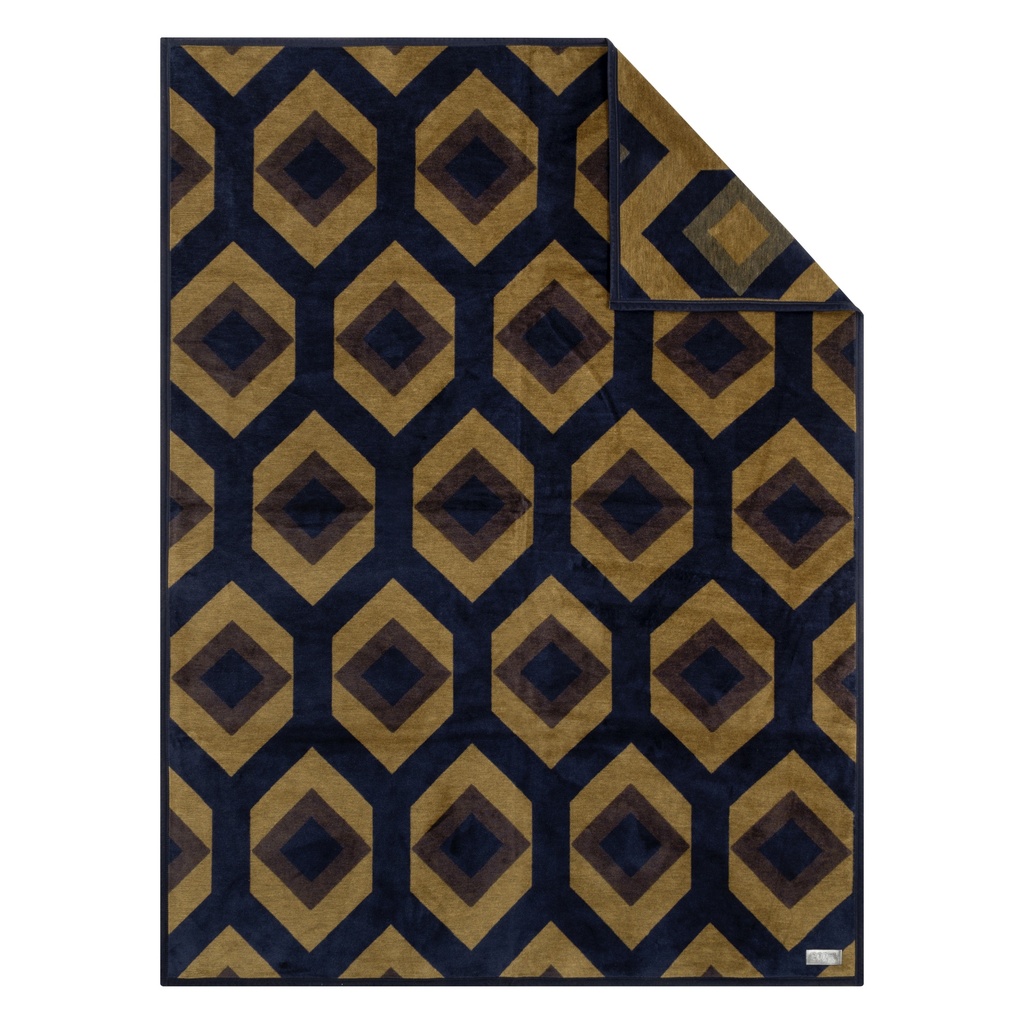

This blanket showcases an authentic diamond pattern inspired by the iconic design spirit of the 1960s. Rooted in simple Scandinavian aesthetics, its clean geometric form and balanced composition create a look that feels both retro and remarkably modern. Deep navy blue paired with warm brown tones gives the design a strong, confident presence while remaining effortlessly timeless.
Crafted from a premium cotton blend, weather you’re decorating or relaxing, this blanket effortlessly enhances any room with cozy warmth and classic mid-century appeal. Easy to care for, it is machine washable and dryer friendly, retaining its softness and beautiful appearance wash after wash. A true statement piece—designed for comfort and made to last.
Certified by OEKO-TEX® Standard 100 which ensures that the blanket contains no chemicals harmful to humans or animals.
Flower power and the hippie movement of the 1960s stood for a new sense of freedom—shaped by a longing for individuality, peace, love, and harmony. Floral as well as geometric patterns defined the design language of the decade. More than ever, questions of style and aesthetics became increasingly important—at IBENA, too.
The Blanket as a Lifestyle Product
In the 1960s, the blanket became more than a simple household necessity. Fashionable designs turned it into a statement piece for living rooms and bedrooms alike. With the introduction of transparent packaging, IBENA became a pioneer in product presentation. It was a small revolution that made the blanket visible and secured it a place in the modern world of consumer goods.
Technical Vision
Technological modernization was pursued with equal determination. The introduction of automated looms increased efficiency, and IBENA’s first data-processing system (punch-card Hollerith technology) marked the company’s entry into the digital age.
Eventful Times
In 1960, H. Beckmann Söhne laid the groundwork for further growth by acquiring property at Industriestraße 13–15 in Bocholt. Yet only a few months later, the region was struck hard by severe flooding of the Aa River—Industriestraße was not spared.
Despite these setbacks, the company continued to look forward. In 1961, it acquired a stake in the paint and lacquer manufacturer Rickert & Co.
A milestone followed in 1963: 75 years of H. Beckmann Söhne—a jubilee celebrating both tradition and entrepreneurial strength.
Then, in 1966, another major disruption occurred: a large fire on Industriestraße devastated wide parts of the former Cosman, Cohen & Co. weaving mill site. It was a setback, but also the starting point for the next new beginning.
New Paths and New Products
During the same period, IBENA explored new directions through a sales partnership with Femira and Reforma under the shared brand name Traumalind. With innovative products such as camping blankets, non-iron bed linen, and nylon carpeting, IBENA once again captured the spirit of the decade.
In 1965, the halls on Dingdener Straße were expanded into IBENA’s central blanket warehouse. At the same time, the company strengthened its international partnerships—in Greece, Italy, and France.
Even amid recession, IBENA demonstrated resilience in 1966/67: new products such as Dralon knit blankets, Thermaflor blankets, and first-aid blankets expanded the range. In the field of decatizing fabrics, Friedrich Hocks of Aachen became a key customer—a company with which business relations had existed since the 19th century. This close connection was further reinforced through IBENA’s investment in the trading company Friedrich Hocks.
Stronger Together
The relationship between IBENA and H. Beckmann Söhne continued to deepen. In 1965, a collection exchange agreement was signed.
The decisive milestone came in 1968: the merger of IBENA with H. Beckmann Söhne into IBENA Vereinigte Textilwerke GmbH & Co. brought the two family businesses back under one roof after more than 70 years. A new building was constructed on Teutonenstraße, where production was reorganized and sales fundamentally restructured—entirely in the spirit of a modern, future-oriented textile industry.

To install this Web App in your iPhone/iPad press
 and then Add to Home Screen.