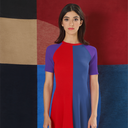

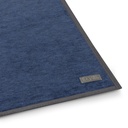


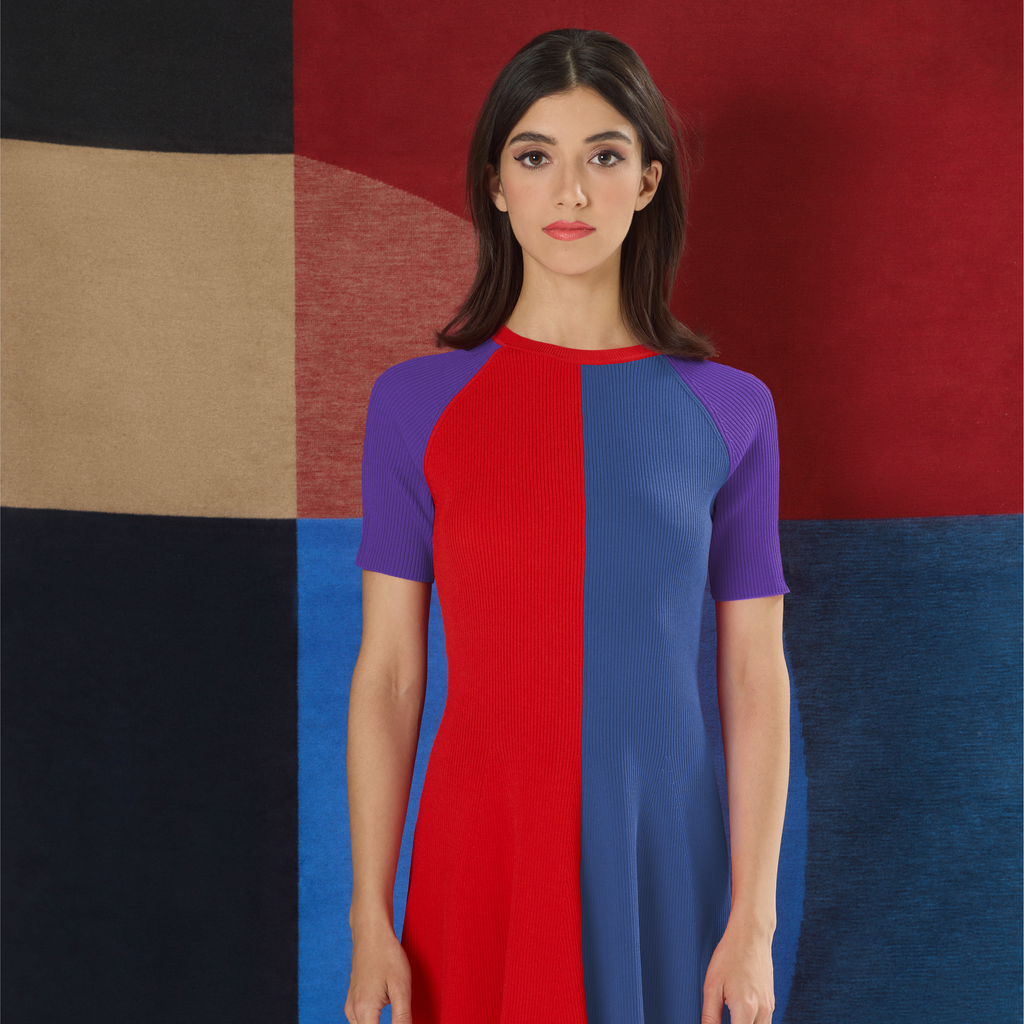
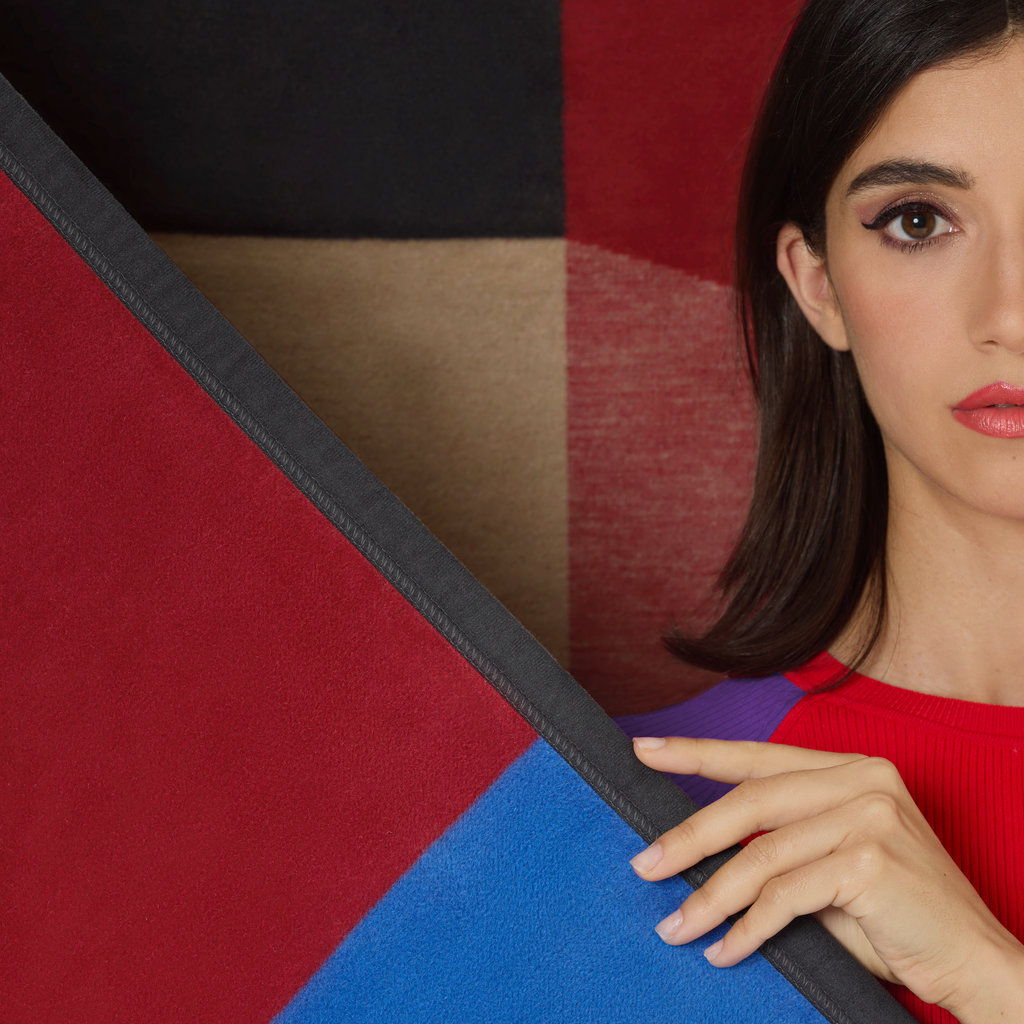

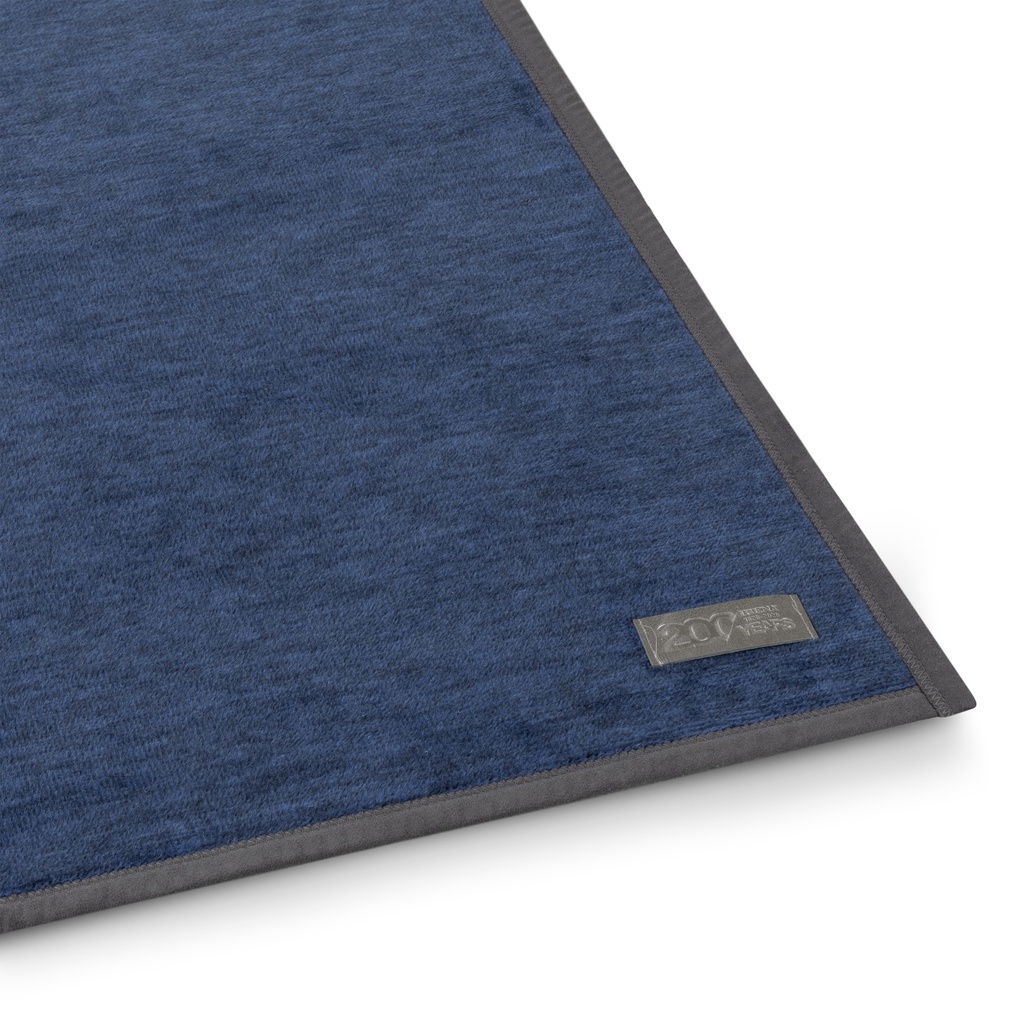
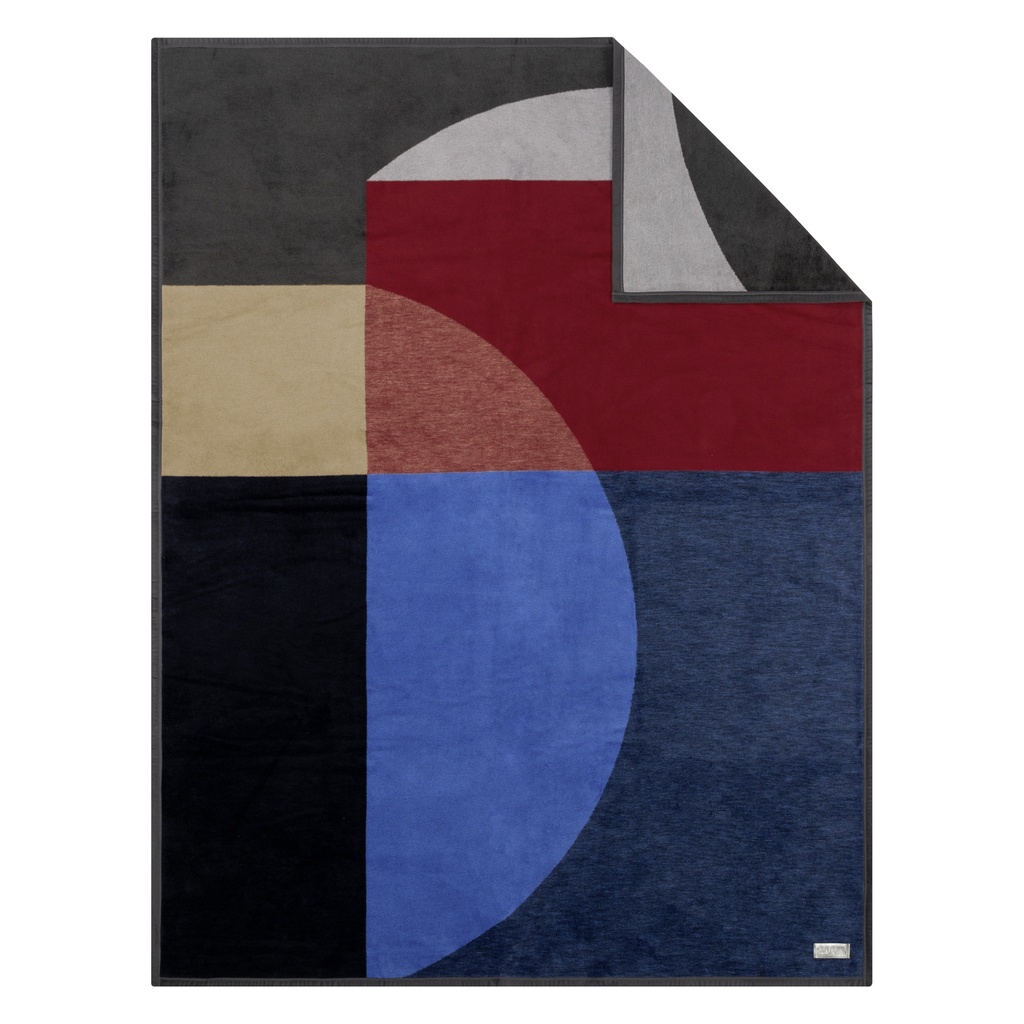

Inspired by the Bauhaus movement’s revolutionary approach to form and color, this blanket brings modern design into everyday comfort. A striking geometric pattern in anthracite, bold red, and deep blue creates a look that is clean, contemporary, and unexpectedly timeless. The balanced composition reflects Bauhaus clarity—where simplicity becomes true sophistication.
Crafted from a premium cotton blend, the blanket offers an exceptionally soft, plush feel, perfect for cozy evenings on the sofa or as a stylish accent on the bed. Its breathable, high-quality fabric provides warmth without heaviness, making it a versatile companion throughout the seasons.
Easy to care for, it is machine washable and dryer friendly, retaining its softness and vibrant design wash after wash. A true statement piece—where iconic modernism meets luxurious comfort.
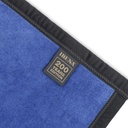
Certified by OEKO-TEX® Standard 100 which ensures that the blanket contains no chemicals harmful to humans or animals.
Between Hyperinflation and Hope for Stability
The 1920s were a decade of radical transformation. With the founding of the Bauhaus by Walter Gropius in 1919, a design revolution began. Clear lines, cubist forms, primary colors, and the rejection of unnecessary ornament reflected a new way of thinking: reduced, rational, modern. This new visual language was more than an aesthetic program—it was the visible sign of a world that, after the horrors of the First World War, had to be reimagined from the ground up.
Between Inflation and New Beginnings
Yet the social and economic foundations were anything but stable. The occupation of the Ruhr in 1923 and the hyperinflation that followed plunged Germany into a deep crisis. Money lost its value virtually overnight. Life savings dissolved into paper. Only with the introduction of the Rentenmark in November 1923 and the international Dawes Plan of 1924 did new hope begin to emerge.
In 1922, Albert Beckmann died, and his wife Maria stepped in with her own assets to replenish the company support fund at J. Beckmann Nachfolger for the workers—an act of responsibility amid economic turbulence.
A Difficult Start for a New Generation
On January 1, 1925, Josef Beckmann assumed leadership of “J. Beckmann Nachfolger.” The longed-for economic upswing, however, was slow to arrive. Production ran sluggishly, often only on a few days each week. It was a time of waiting—yet hope endured.
A Step Forward
The year 1926 finally brought momentum. On February 26, J. Beckmann Nachfolger was registered as a limited partnership. The purchase of the Baldus factory on Teutonenstraße, the modernization of machinery, and the construction of a new weaving hall were intended to provide fresh impulses. The planned 100th anniversary celebration, however, was initially postponed for economic reasons.
Between 1926 and 1928, the first signs of recovery finally appeared. Numerous new and renovated factories reshaped Bocholt’s cityscape. At J. Beckmann Nachfolger, the delayed centenary celebration was held on Teutonenstraße, and the old factory on Kreuzstraße was sold.
A Brief Upswing
At Heinrich Beckmann Söhne, a new generation also stepped into responsibility: Ludwig’s sons Heinrich and Alfred Beckmann joined the company’s leadership, continuing the family tradition.
But the brief period of prosperity was soon overshadowed once again. In 1929, the global economic crisis began, confronting the Beckmann family—like all of Germany—with renewed and immense challenges.

To install this Web App in your iPhone/iPad press
 and then Add to Home Screen.