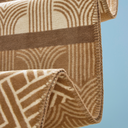

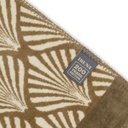
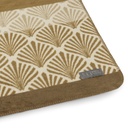
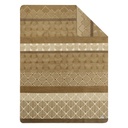

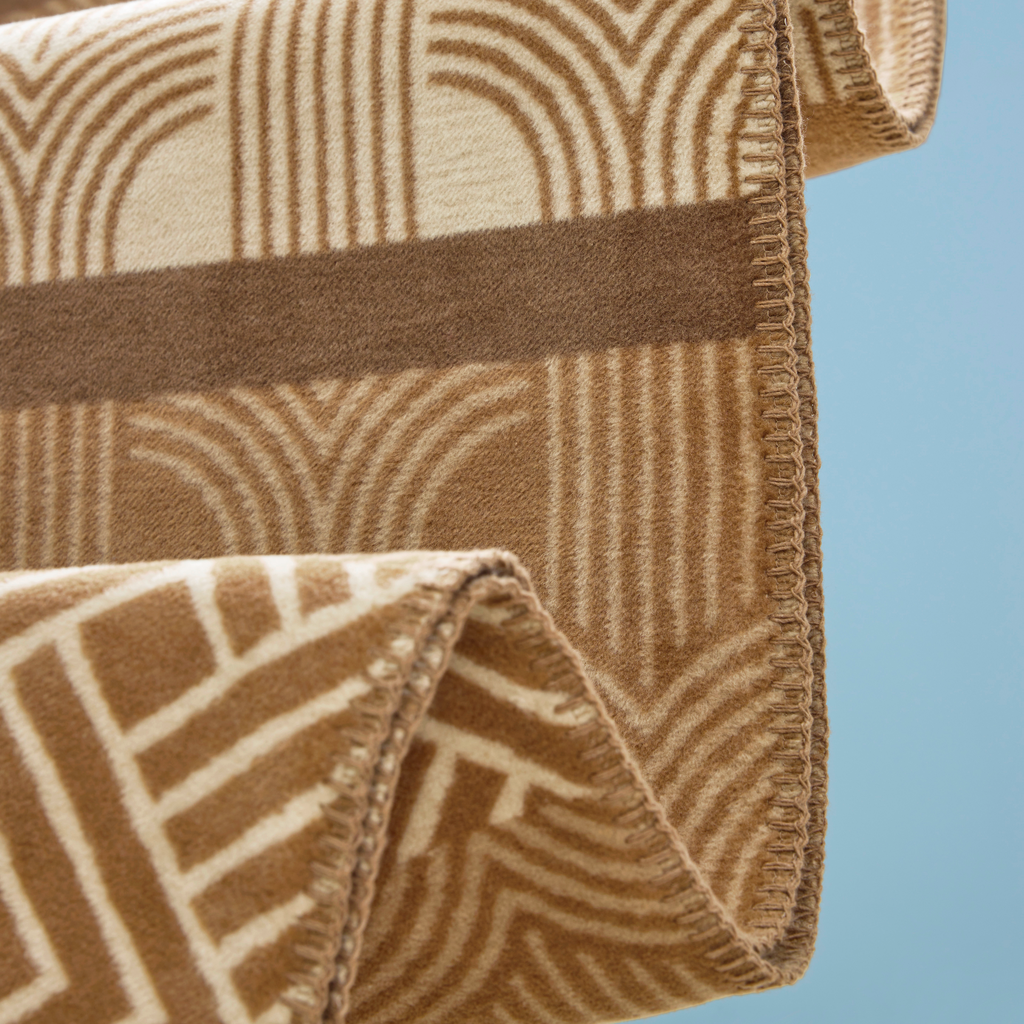
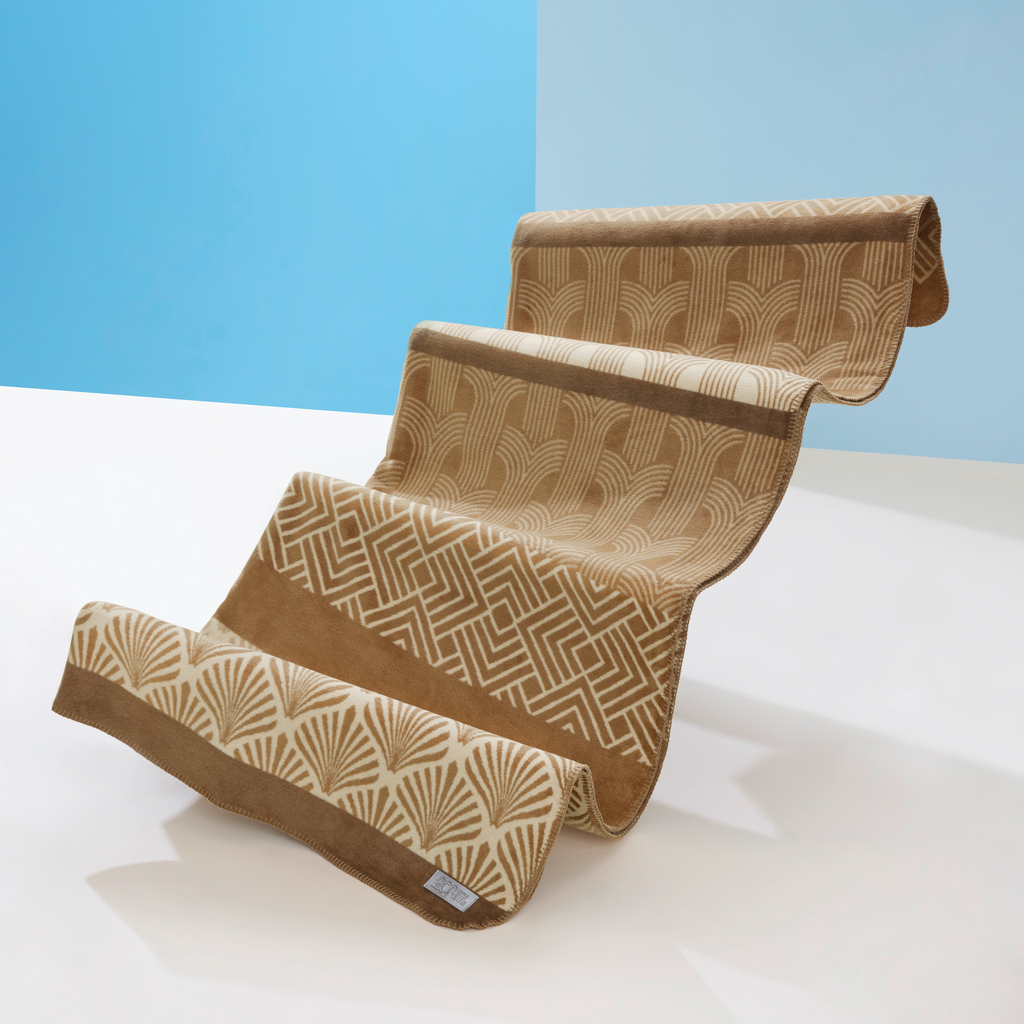
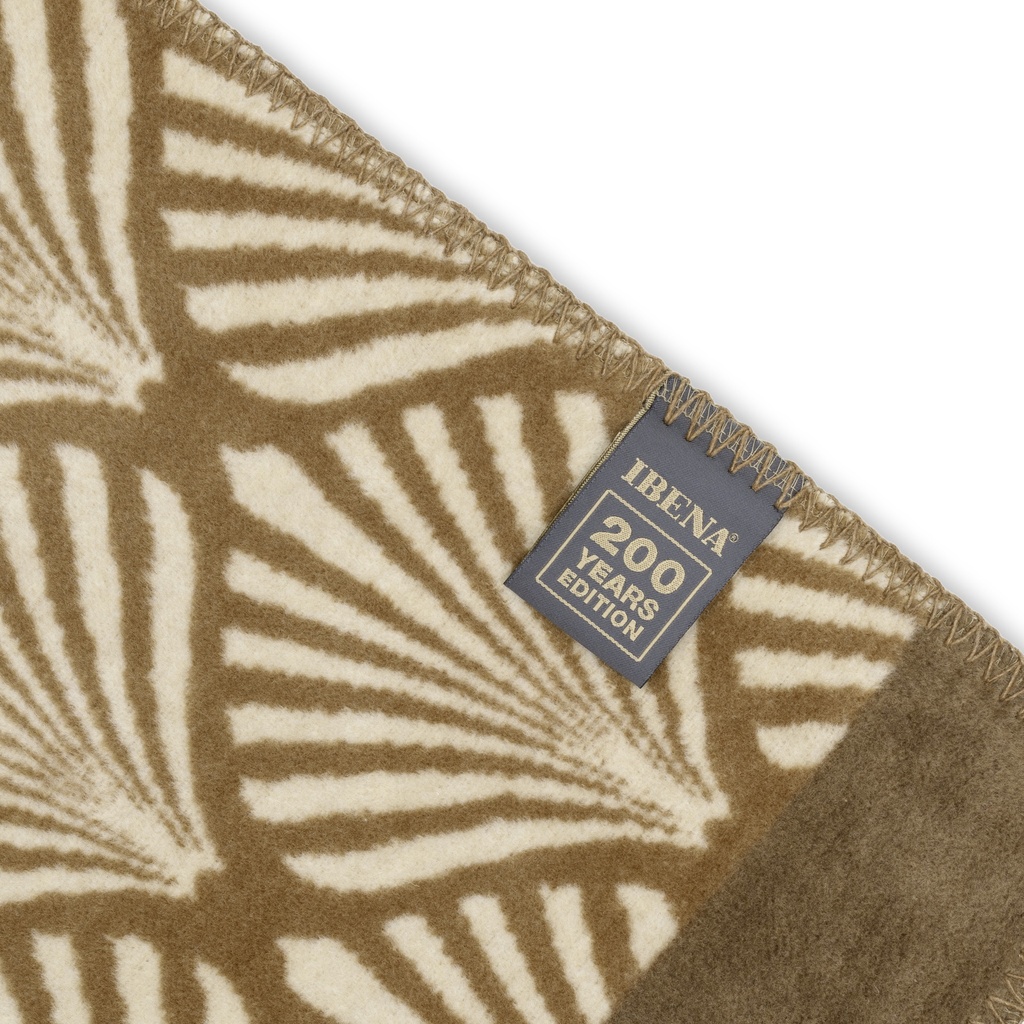
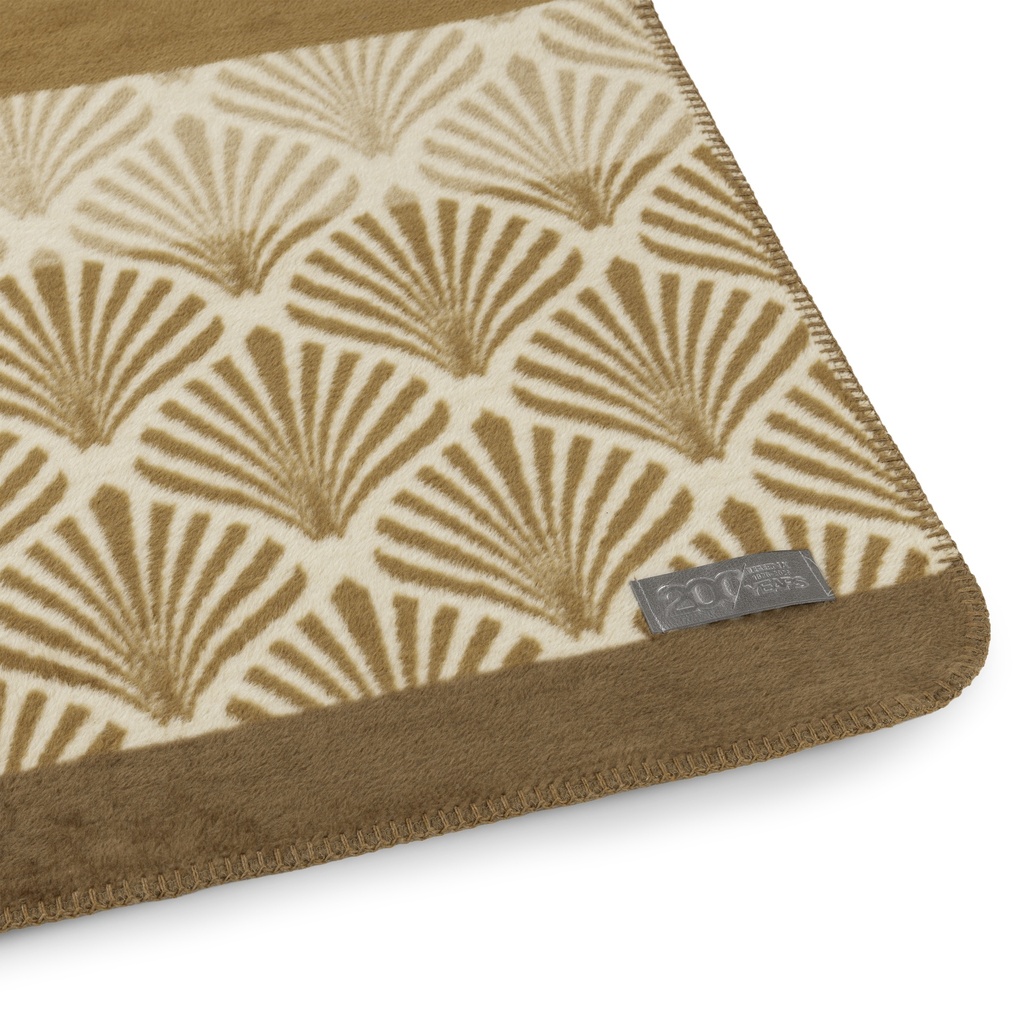
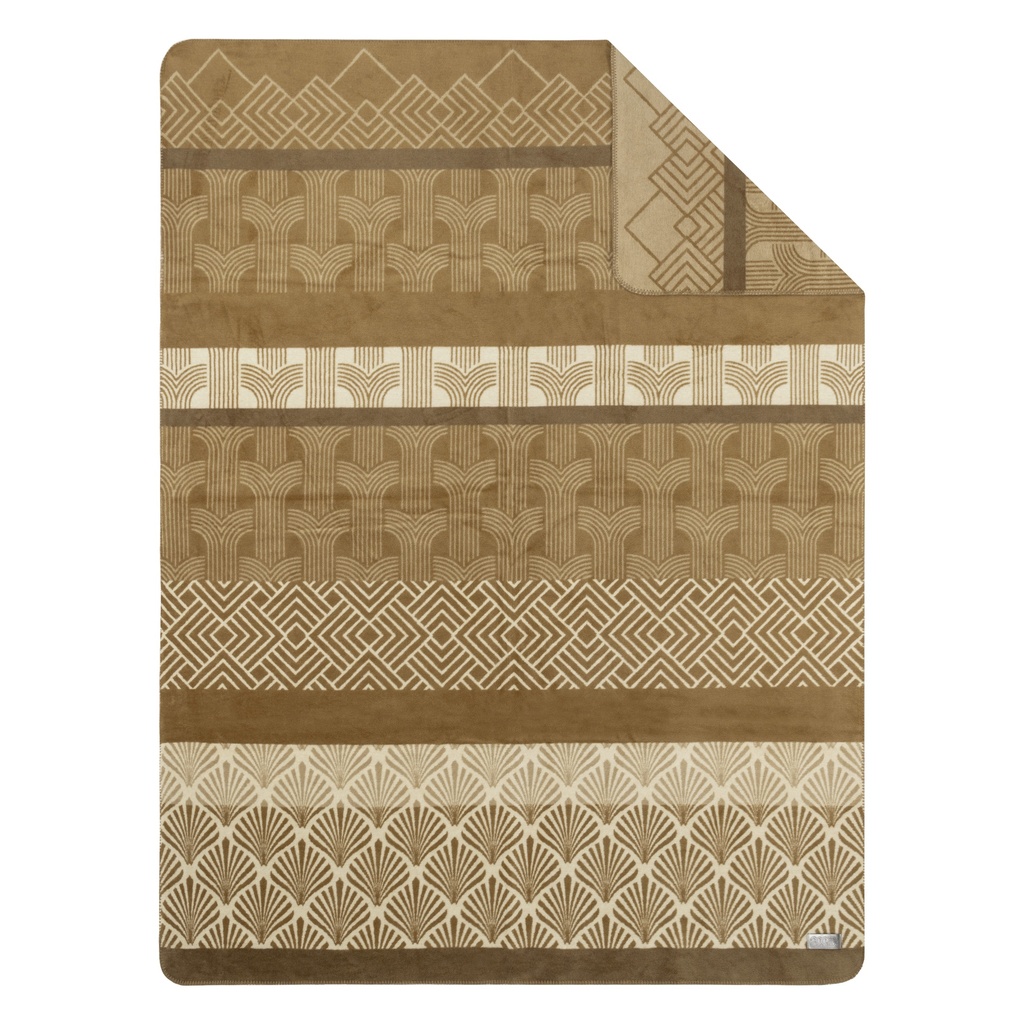

Bold and expressive, this blanket captures the unmistakable glamour of Art Deco design. Clear geometric forms and perfectly symmetrical patterns come together in rich golden-brown tones, creating a look that feels both extravagant and timeless. Inspired by the elegance of the early 20th century, it adds a sophisticated statement to any living space.
Crafted from a premium cotton blend, the blanket is wonderfully soft and plush, offering luxurious comfort alongside its striking design. Whether draped over a sofa, layered on a bed, or wrapped around you on a cozy evening, it brings warmth, style, and a touch of vintage-inspired opulence to everyday life.
Easy to care for, it is machine washable and dryer friendly, retaining its velvety softness and vibrant beauty wash after wash. A true Art Deco accent piece—where bold design meets exceptional comfort.
Certified by OEKO-TEX® Standard 100 which ensures that the blanket contains no chemicals harmful to humans or animals.
With the emergence of Art Deco shortly after the First World War, clear lines, geometric forms, and an elegant, expressive design moved to the forefront. In response to the hardships of the war years, a longing arose for a lighter life—for luxury and glamour. This new aesthetic reflected exactly that desire.
Expansion in Years of Peace
This step signaled calm and continuity at a time when stability was a precious asset. Even before war shook Europe, H. Beckmann Söhne continued to grow. As early as 1912, the company built a second weaving hall, equipped with an additional steam engine and its own metalworking shop. One year later, in 1913, the firm proudly celebrated 25 years in operation, now employing 128 people. The company had established itself as a vital pillar in Bocholt and the regional textile industry.
The Outbreak of War – Trade Declines, the State Intervenes
With the beginning of the First World War, the economic landscape changed radically. State control of raw materials, introduced around 1915, brought large parts of German industry to a standstill. The textile sector was hit particularly hard by the collapse of imports. The British naval blockade cut Germany off from overseas resources, and substitute materials had to be strictly rationed.
J. Beckmann Nachfolger was affected as well: production had to be largely suspended as the supply of materials became increasingly uncertain.
Responsibility in Stormy Times
Despite immense economic pressure, social responsibility remained a guiding principle at J. Beckmann Nachfolger. Through its company support fund, the business helped secure the livelihoods of families of enlisted employees—providing more assistance than many other employers, and even more than the state itself.
A Far-Sighted Transition
After the war, responsibility was passed on in 1919. On July 5, Albert Beckmann transferred the company to his nephew Josef Albert Beckmann through a purchase agreement. Just five days later, on July 10, 1919, the change was officially entered into the commercial register. Josef Albert thus became the sole owner of the traditional factory.

To install this Web App in your iPhone/iPad press
 and then Add to Home Screen.