







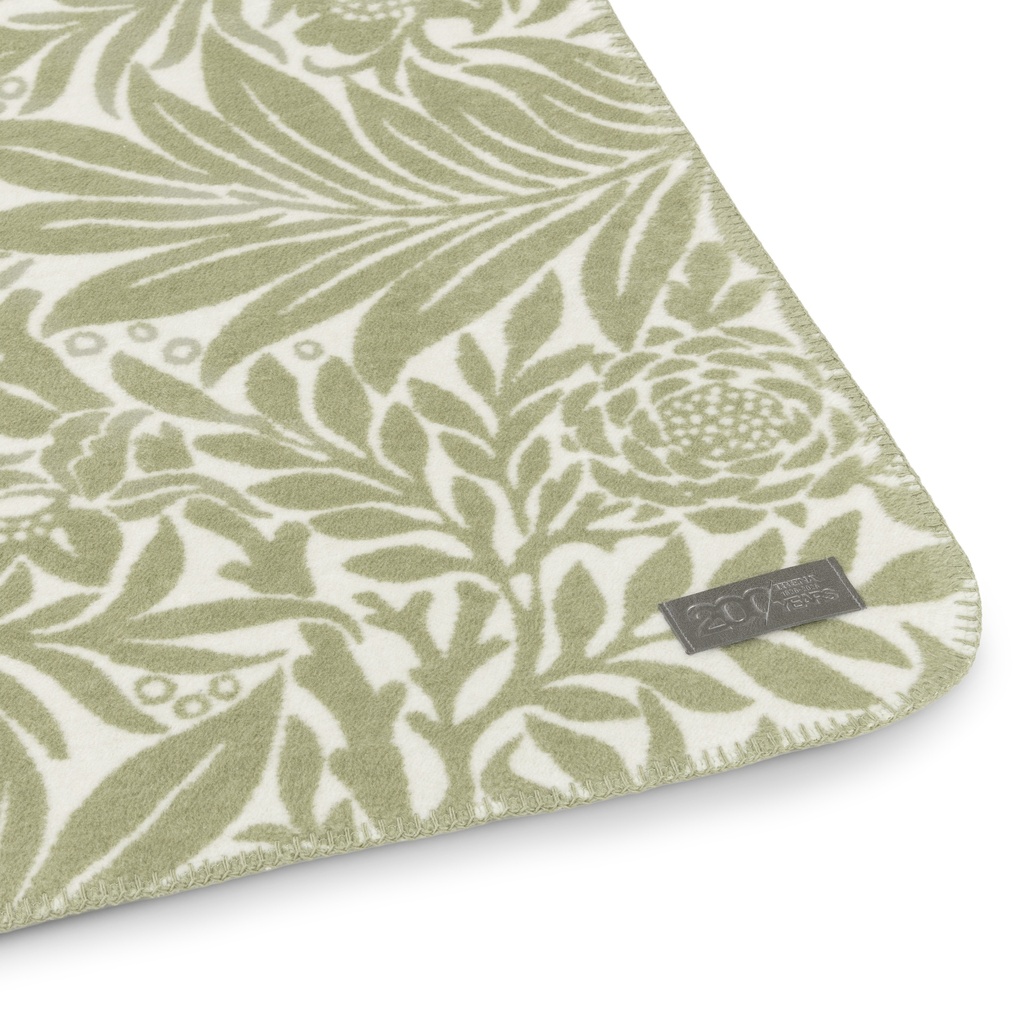
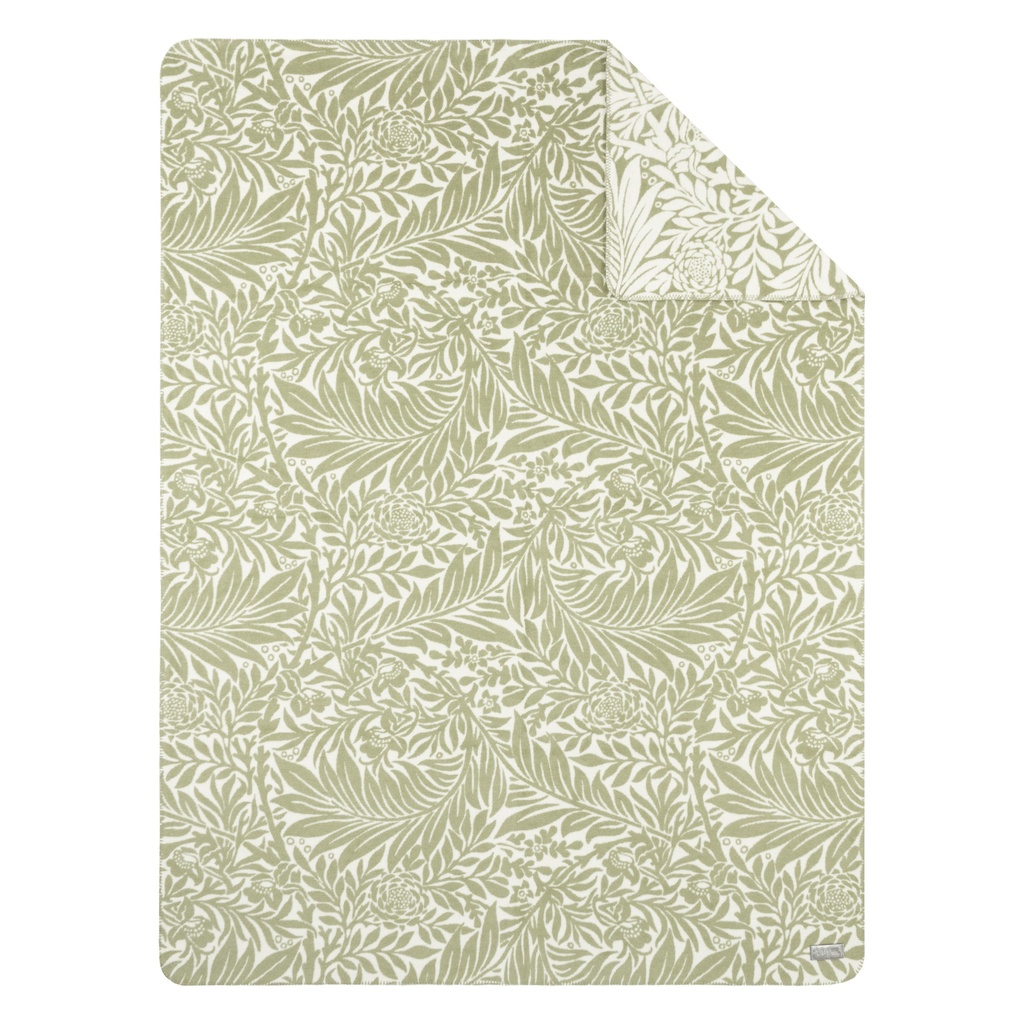

This blanket features flowing floral lines, delicate leaves, and elegant ornamentation set against a soft light-green background—airy, graceful, and deeply inspired by nature. The design reflects the unmistakable signature of William Morris, the founder of the Arts and Crafts movement, whose work celebrated the harmony of art, craftsmanship, and the natural world. This piece is a clear homage to his timeless aesthetic.
Crafted from a premium cotton blend, the blanket is as luxurious in feel as it is in appearance. Its plush, velvety surface offers exceptional softness and comfort, making it perfect for cozy evenings at home or as a refined decorative accent on a sofa or bed. Easy to care for, it is machine washable and dryer friendly, retaining its softness and beauty wash after wash.
Certified by OEKO-TEX® Standard 100 which ensures that the blanket contains no chemicals harmful to humans or animals.
When Art Transforms the Everyday
The Arts and Crafts movement paved the way for Art Nouveau. It overcame the separation between art and craftsmanship and, as a response to industrialization, emphasized high-quality handwork, natural materials, and beauty in everyday life. Art Nouveau built upon these ideals with flowing lines, organic forms, and a clear rejection of historical imitation. Furniture, jewelry, architecture, and textiles became lighter, more curved, and more free—an expression of a generation determined to break away from the constraints of the 19th century and embrace the dawn of modernity.
A New Beginning in Bocholt
This aesthetic renewal coincided with a time of rapid industrial and social transformation—also in Bocholt, where the population had grown to more than 13,000 by 1890 and the town increasingly established itself as an industrial center. Both “J. Beckmann Nachfolger Albert Beckmann” and “Heinrich Beckmann Söhne” made it their mission to secure the future of the Beckmann name within the textile world—driven by innovation, craftsmanship, and a vision for what textiles could become: not merely functional, but an essential part of daily beauty and comfort.
Between Fire and Renewal
Heinrich Beckmann’s sons, Albert and Ludwig, quickly expanded their company. In 1892, they purchased land on Industriestraße, built a finishing plant, and soon after a weaving mill with 80 looms. But just one year later, a major fire destroyed the entire facility. The shock was immense—yet rebuilding succeeded in record time. By July 1893, production was running again, a testament to resilience and determination.


Tragedy on Sachsenstraße
In order to supply his brothers Albert and Ludwig with yarns, Franz Beckmann founded a cotton spinning mill in 1895. Yet the project was overshadowed by another catastrophe: when the unfinished building collapsed on Sachsenstraße in Bocholt, 22 people lost their lives and 16 were injured. Franz Beckmann was sentenced to prison. Only in 1898 was the mill finally able to begin operations—serving as a sobering reminder of the risks that accompanied the era’s rapid growth.
A Sense of Social Responsibility
Alongside economic ambition, Albert Beckmann also demonstrated a strong social conscience. As early as 1892, “J. Beckmann Nachfolger Albert Beckmann” introduced its own company health insurance fund—an innovation far ahead of its time. Beyond the business itself, Albert Beckmann remained committed to the wider community. As a founding member of the Bocholt building association, he actively supported the creation of affordable housing—another example of the responsibility and care that distinguished the Beckmann family alongside their entrepreneurial success.
This blanket features flowing floral lines, delicate leaves, and elegant ornamentation set against a soft light-green background—airy, graceful, and deeply inspired by nature. The design reflects the unmistakable signature of William Morris, the founder of the Arts and Crafts movement, whose work celebrated the harmony of art, craftsmanship, and the natural world. This piece is a clear homage to his timeless aesthetic.
Crafted from a premium cotton blend, the blanket is as luxurious in feel as it is in appearance. Its plush, velvety surface offers exceptional softness and comfort, making it perfect for cozy evenings at home or as a refined decorative accent on a sofa or bed. Easy to care for, it is machine washable and dryer friendly, retaining its softness and beauty wash after wash.
Certified by OEKO-TEX® Standard 100 which ensures that the blanket contains no chemicals harmful to humans or animals.
When Art Transforms the Everyday
The Arts and Crafts movement paved the way for Art Nouveau. It overcame the separation between art and craftsmanship and, as a response to industrialization, emphasized high-quality handwork, natural materials, and beauty in everyday life. Art Nouveau built upon these ideals with flowing lines, organic forms, and a clear rejection of historical imitation. Furniture, jewelry, architecture, and textiles became lighter, more curved, and more free—an expression of a generation determined to break away from the constraints of the 19th century and embrace the dawn of modernity.
A New Beginning in Bocholt
This aesthetic renewal coincided with a time of rapid industrial and social transformation—also in Bocholt, where the population had grown to more than 13,000 by 1890 and the town increasingly established itself as an industrial center. Both “J. Beckmann Nachfolger Albert Beckmann” and “Heinrich Beckmann Söhne” made it their mission to secure the future of the Beckmann name within the textile world—driven by innovation, craftsmanship, and a vision for what textiles could become: not merely functional, but an essential part of daily beauty and comfort.
Between Fire and Renewal
Heinrich Beckmann’s sons, Albert and Ludwig, quickly expanded their company. In 1892, they purchased land on Industriestraße, built a finishing plant, and soon after a weaving mill with 80 looms. But just one year later, a major fire destroyed the entire facility. The shock was immense—yet rebuilding succeeded in record time. By July 1893, production was running again, a testament to resilience and determination.
Tragedy on Sachsenstraße
In order to supply his brothers Albert and Ludwig with yarns, Franz Beckmann founded a cotton spinning mill in 1895. Yet the project was overshadowed by another catastrophe: when the unfinished building collapsed on Sachsenstraße in Bocholt, 22 people lost their lives and 16 were injured. Franz Beckmann was sentenced to prison. Only in 1898 was the mill finally able to begin operations—serving as a sobering reminder of the risks that accompanied the era’s rapid growth.
A Sense of Social Responsibility
Alongside economic ambition, Albert Beckmann also demonstrated a strong social conscience. As early as 1892, “J. Beckmann Nachfolger Albert Beckmann” introduced its own company health insurance fund—an innovation far ahead of its time. Beyond the business itself, Albert Beckmann remained committed to the wider community. As a founding member of the Bocholt building association, he actively supported the creation of affordable housing—another example of the responsibility and care that distinguished the Beckmann family alongside their entrepreneurial success.

To install this Web App in your iPhone/iPad press
 and then Add to Home Screen.