
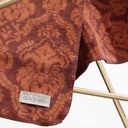

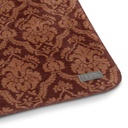
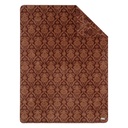

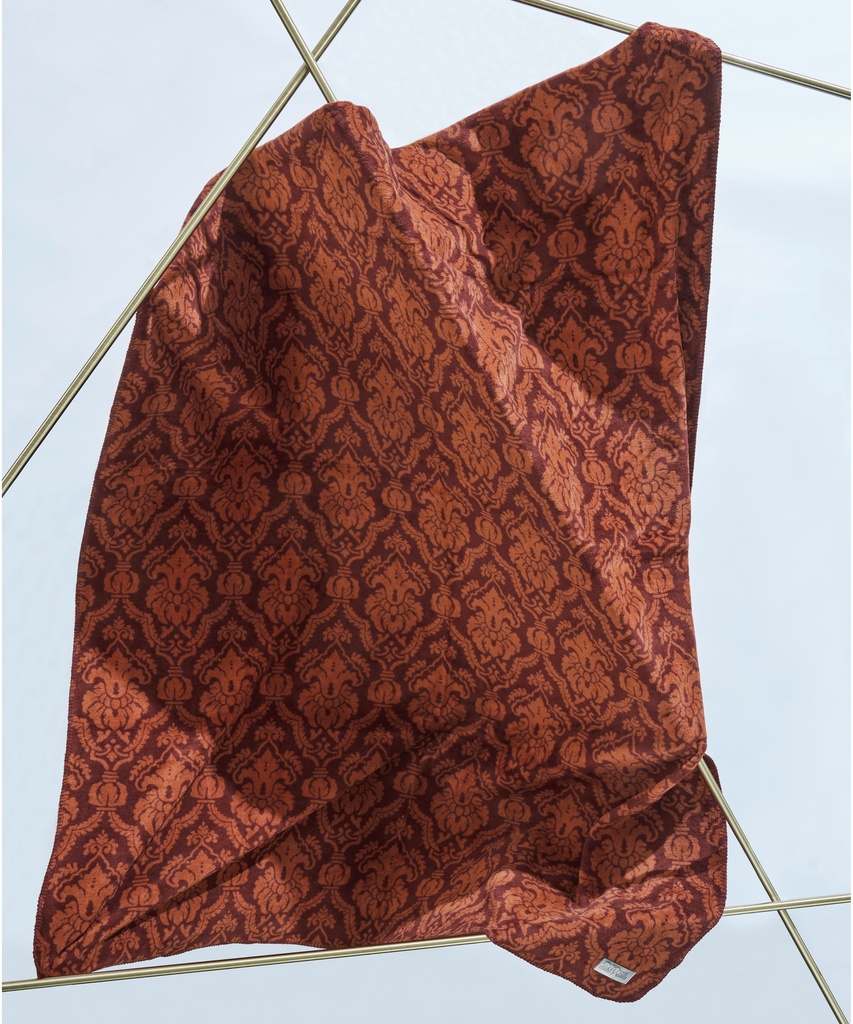
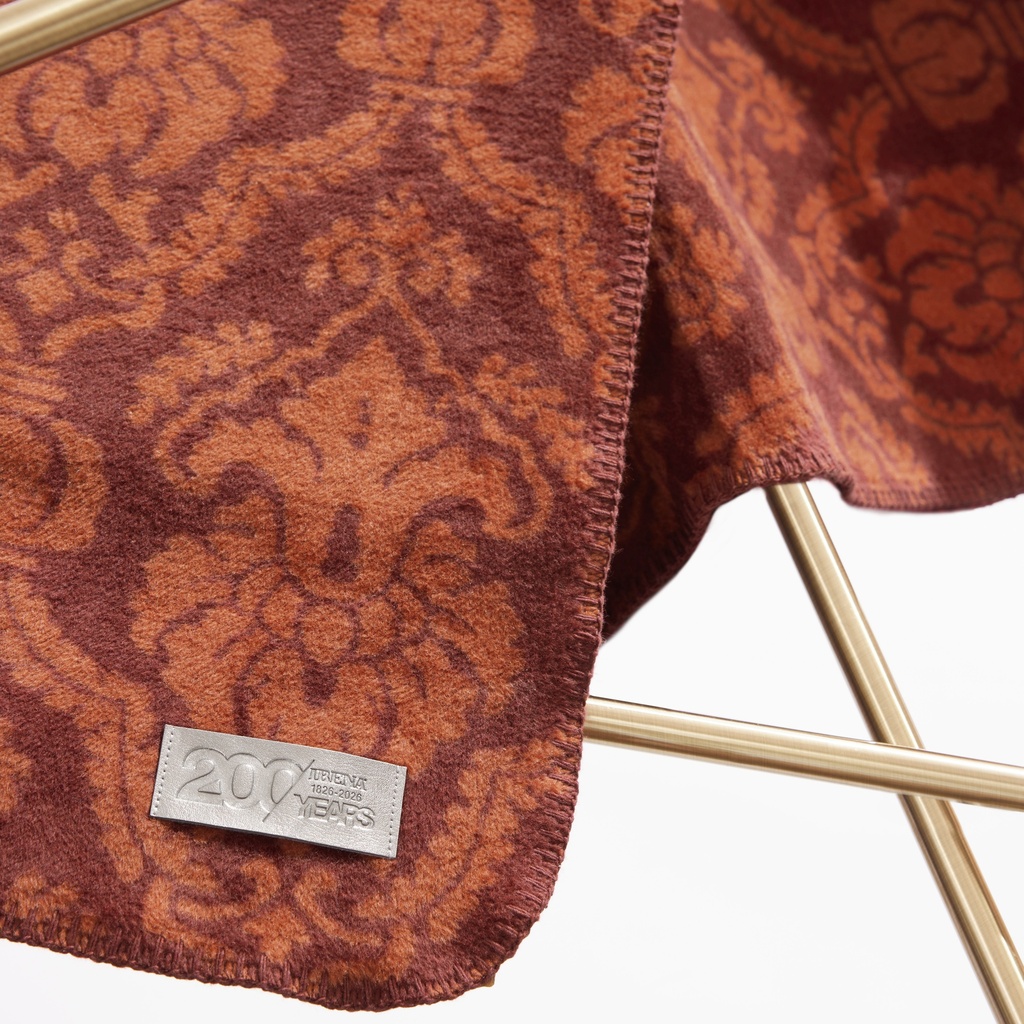
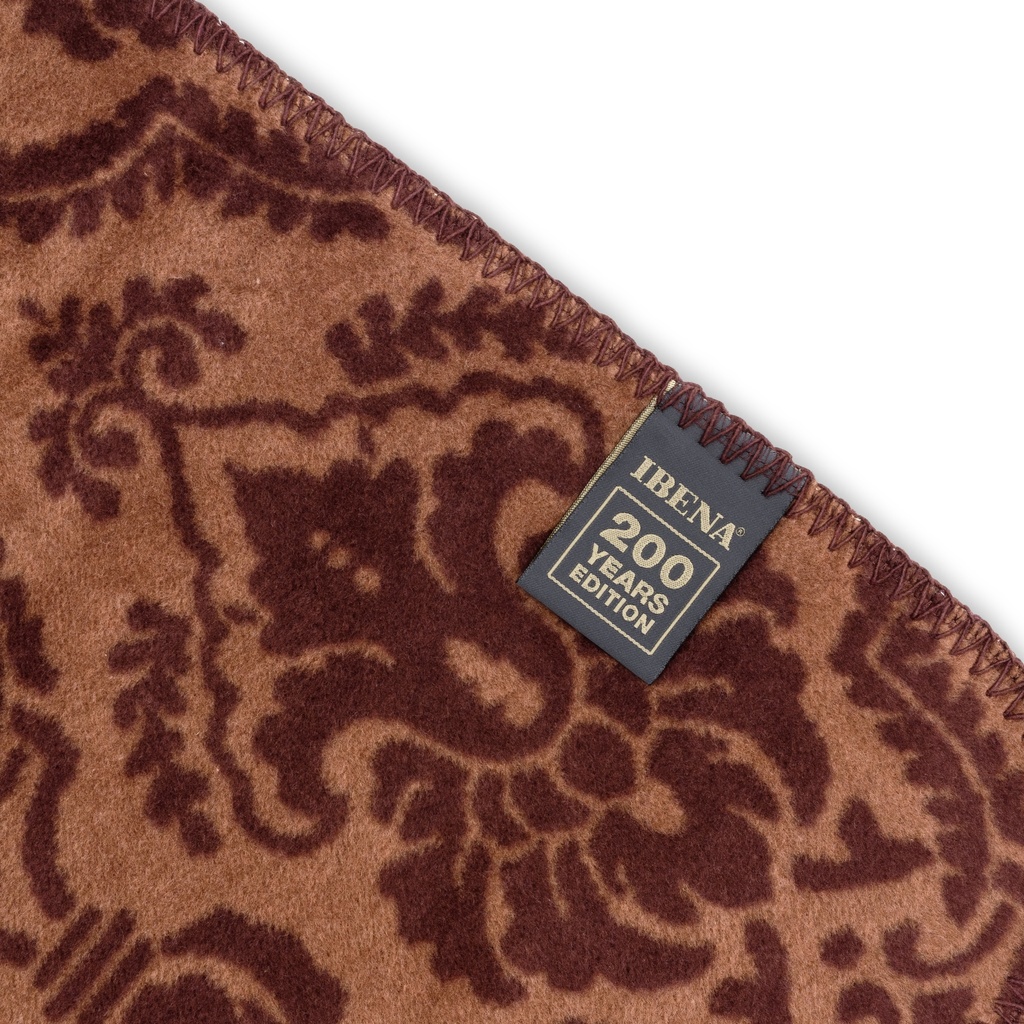
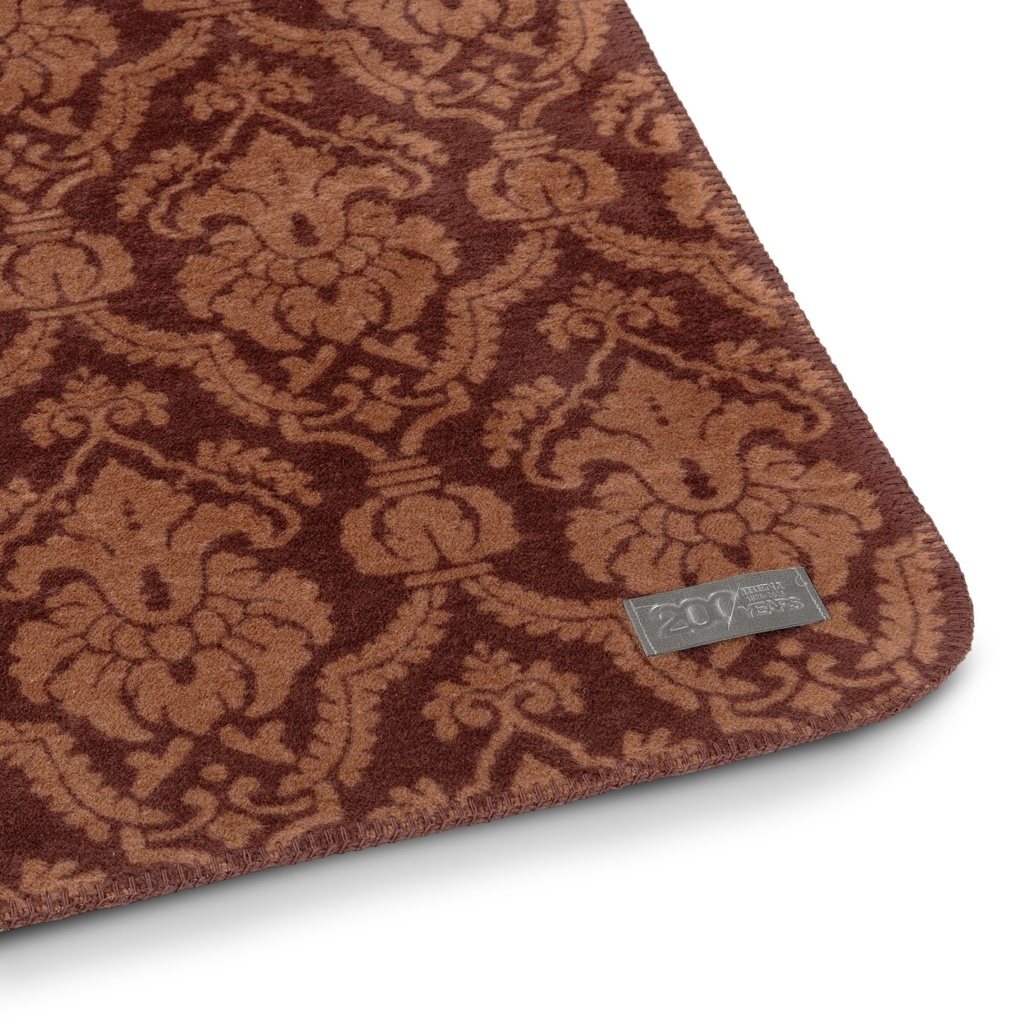


Neo-Renaissance aesthetics define the character of this piece, drawing inspiration from the artistic ideals of the Italian Renaissance. Symmetry, balance, and harmonious proportion take center stage, reflecting an era that celebrated beauty, refinement, and elegance. Ornamental floral motifs, carefully arranged in a structured composition, echo the decorative language of historic palaces and classical architecture.
Rendered in a deep Bordeaux red, the design conveys warmth and sophistication while expressing a timeless longing for harmony and artistry. The result is a graceful blend of historical grandeur and modern sensibility—an homage to Renaissance-inspired beauty reinterpreted for today.
As all IBENA blankets machine washable and dryer-friendly.
Certified by OEKO-TEX® Standard 100 which ensures that the blanket contains no chemicals harmful to humans or animals.
Europe reveled in the style of the Neo-Renaissance—a stylistic return to the ideals of the Italian Renaissance. Clear lines and harmonious proportions stood for humanism and the flourishing of the individual—ideals that were also reflected in the corporate culture of the time.
Civil War and the Cotton Crisis
On the North American continent, the American Civil War was ignited by the conflict over slavery. A deep economic, social, and political divide separated the industrial North from the agricultural South. When Abraham Lincoln, a determined opponent of slavery, was elected president in 1860, several Southern states seceded from the Union. In 1861, war broke out—a conflict that ended four years later with the abolition of slavery in the United States and the restoration of the Union.
The consequences reached as far as Germany. Because the Southern states could hardly export any cotton, a severe cotton shortage emerged here as well. The price per kilogram rose dramatically—from 94 pfennigs to 8.62 marks. This was a challenge that J. Beckmann also had to confront.
Stronger Together
As Josef Philipp Beckmann firmly established his weaving mill in Bocholt, he took the next step together with his brother Franz, who operated a thriving textile trade in the city. On May 7, 1862, they joined forces, combining their knowledge and networks into a single enterprise. Only two years later, Franz died at the age of 82. But the path had been set: from their partnership grew a resilient foundation—one that promised stability in difficult times and room for growth in calmer periods.
Steam as a Driving Force
In 1866, Josef Philipp Beckmann set a clear sign for the future. By applying for a second steam boiler, he laid the groundwork for further expansion. More power meant greater production, and greater production meant more opportunities—not only for the company, but for the entire region.
In Family Hands
Just one year later, on January 21, 1867, Josef Philipp Beckmann transferred the business to his sons Heinrich and Albert. It was a deliberate decision to usher in a generational transition and a clear signal of confidence in the future. On April 20, 1871, the brothers Heinrich and Albert finally signed the partnership agreement. Their commitment was unmistakable: “J. Beckmann” would remain a family business.
In doing so, they united the drive for progress with responsibility, growth with cohesion—values that would endure across generations.

To install this Web App in your iPhone/iPad press
 and then Add to Home Screen.