




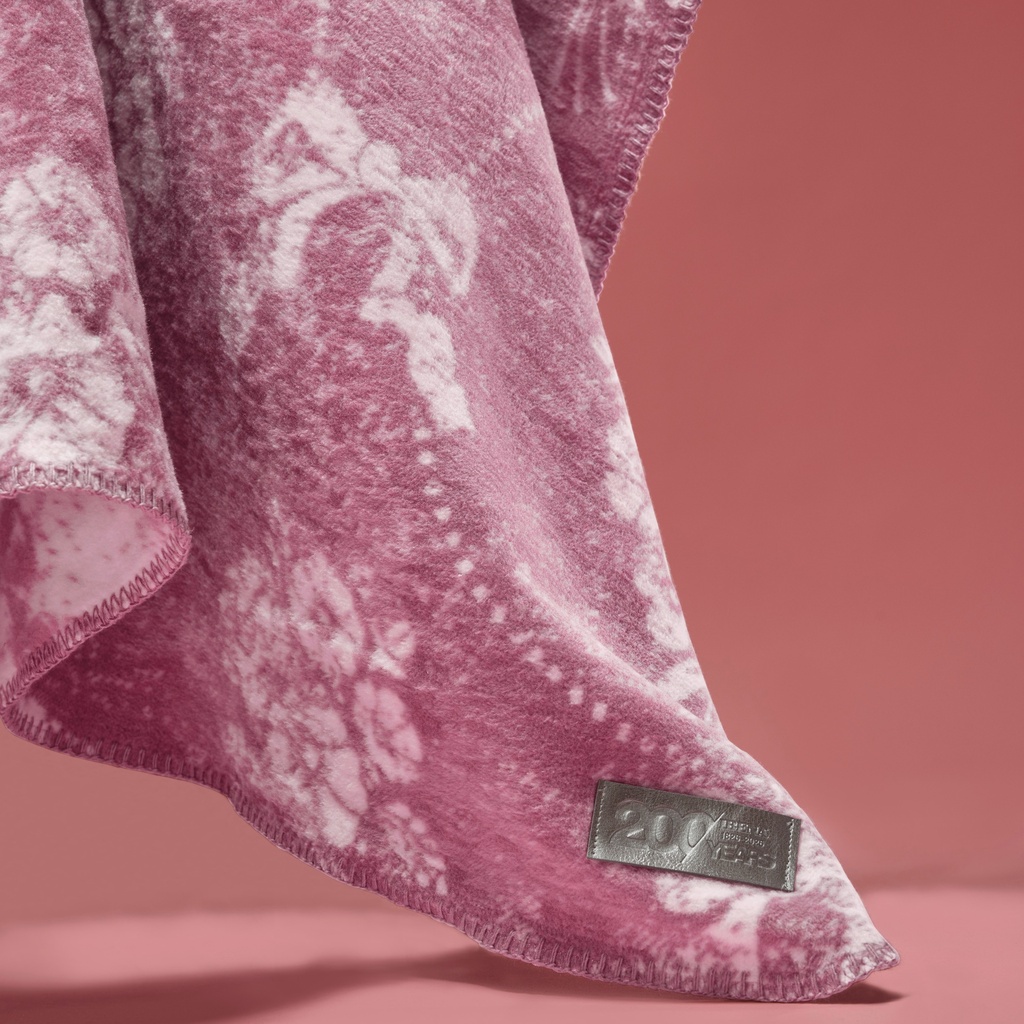
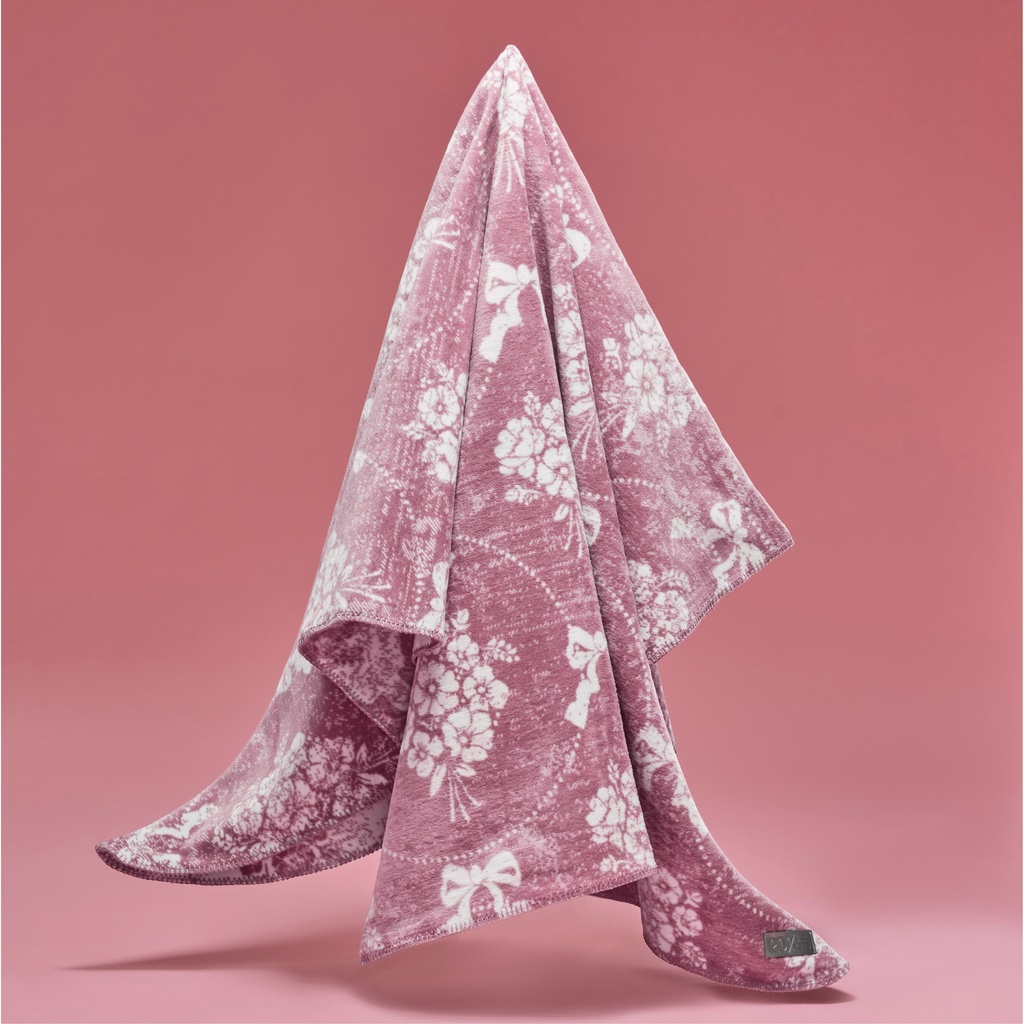
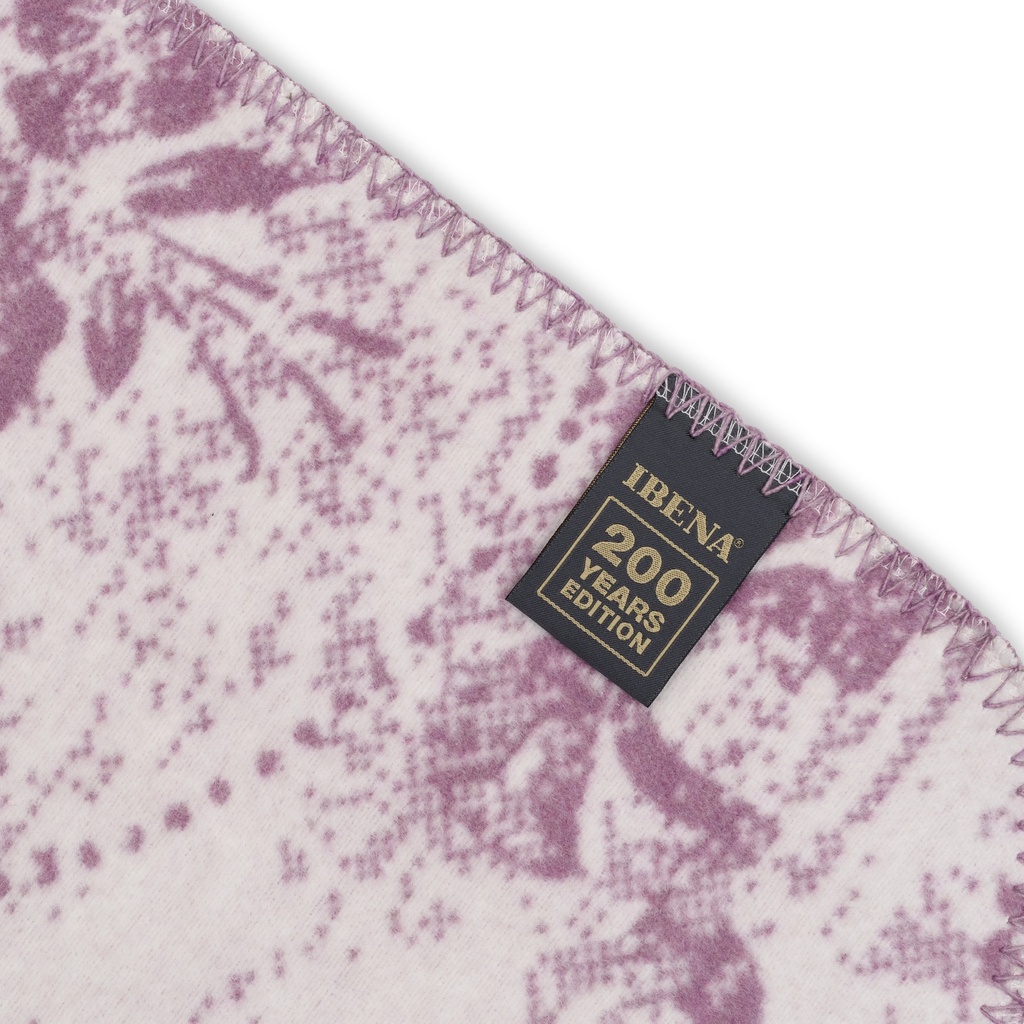
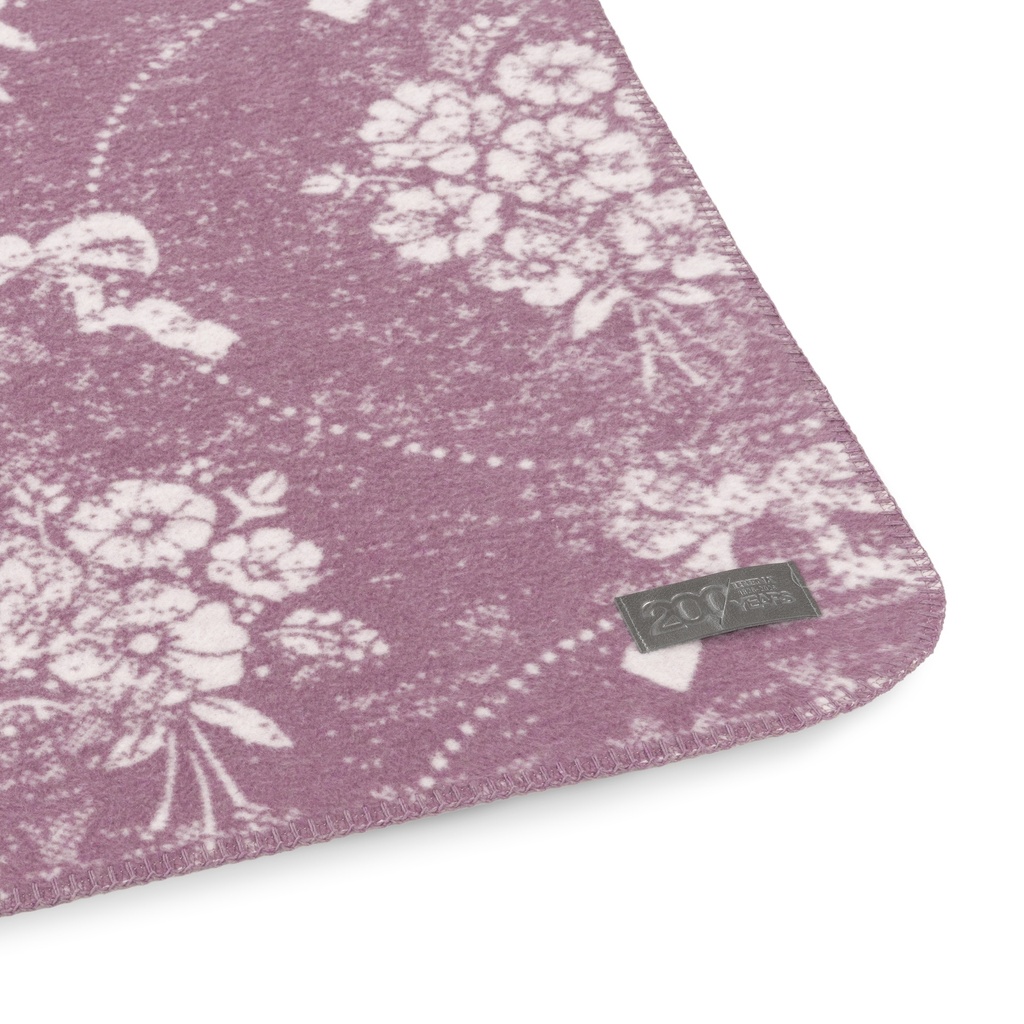
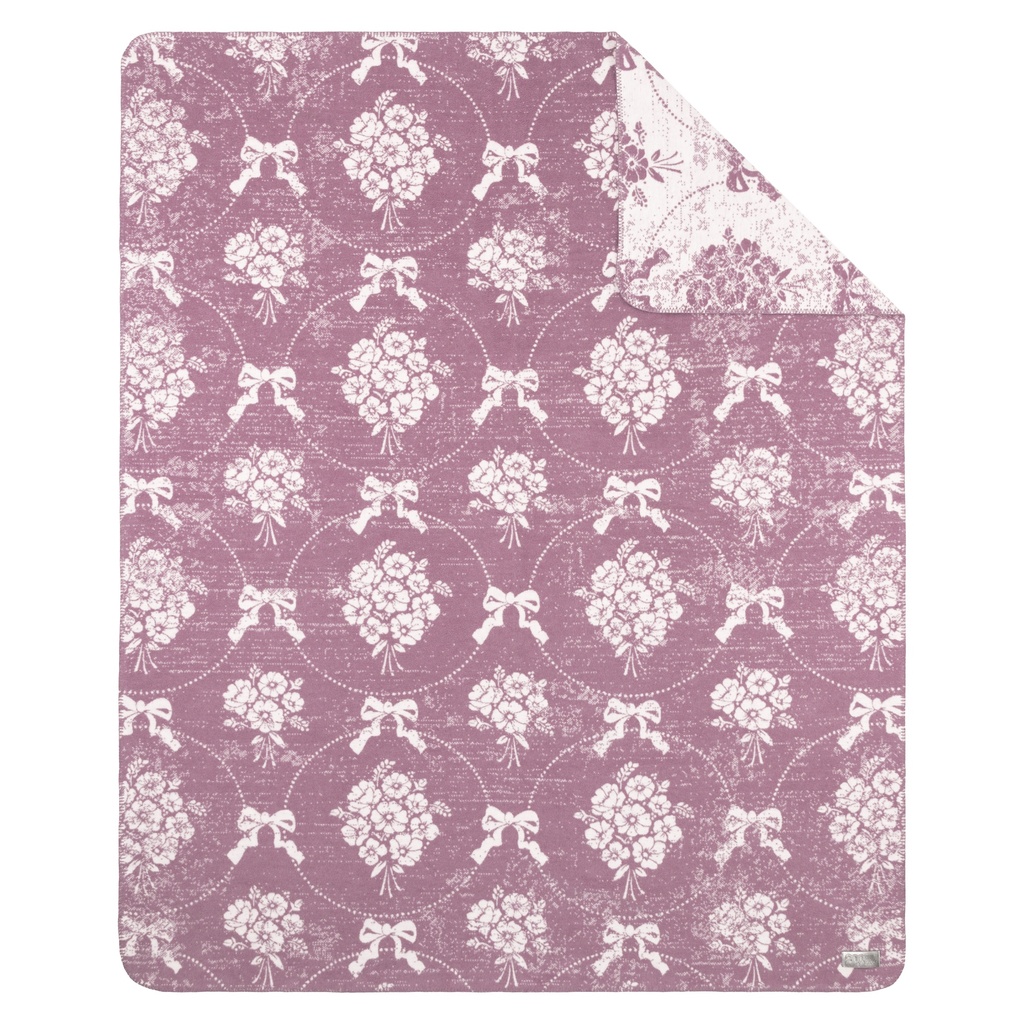

Set against a soft blush pink background, classic floral bouquets and graceful ribbons unfold across this design. The piece draws on the aesthetic of the Biedermeier era, reinterpreting it for the present day.
Our design team created this beautiful blanket in the spirit of the times. Flowers connect to springtime and new beginnings. With the floral pattern of the era this blanket speaks of the hope that lived in the hearts of the people despite tremendous hardship. The kind of hope that is less about optimism and more about endurance. Hope as the quiet decision to continue, even when outcomes are uncertain.
History shows that periods of crisis often give rise to lasting positive change. May this blanket serve as reminder that there is always a reason for hope. It features a machine washable and dryer-friendly cotton blend with whipstitch binding.
Certified by OEKO-TEX® Standard 100 which ensures that the blanket contains no chemicals harmful to humans or animals.
The 1840s were a time of simmering unrest. The achievements of industrialization did not benefit everyone. Cloth production shifted from manual labor to mechanical looms in factories. Quality and speed increased, prices fell—but for countless home weavers, industrial progress meant the end of their livelihoods.
Poor harvests throughout the 1840s further drove up food prices, while inexpensive imports from England pushed down domestic wages. Many families slipped into poverty: hunger, child labor, workplace accidents, and the absence of social security shaped their daily lives. On June 3, 1844, desperation erupted. In Peterswaldau, weavers gathered in front of the home of the manufacturers Ernst Friedrich and August Zwanziger, singing the mocking protest song “Das Blutgericht” (“The Blood Tribunal”) after wages had been cut. Scuffles turned into arrests, and arrests into a wildfire. Houses and factories were devastated as the protest march grew larger and larger. The Prussian government ordered the military to intervene. On June 6, the uprising ended in bloodshed, leaving eleven dead and many more injured. The judges later refrained from imposing the harshest penalties, pointing instead to the crushing hardship that had driven the revolt.
The unrest echoed far beyond Silesia. Newspapers reported on it, literature took up the subject, and artists—from Heinrich Heine to Carl Wilhelm Hübner—turned the weavers’ despair into a symbol of an epochal rupture. Hübner’s painting “The Silesian Weavers” was more than art; it was a statement—a powerful outcry against injustice.
The Great Famine
The year 1846 became the last great famine of the early industrial age. It began with the potato blight that had been spreading since 1844 and now reached its peak. Potatoes, the staple food of the poorer population, rotted in the fields. Weather-related crop failures in grain harvests followed. What came next was a catastrophe of unimaginable scale.
Driven by hunger, the poor were forced to survive on weeds and animal feed. Bread was baked from spoiled grain, and “couch-grass bread,” made from the roots of weeds, was promoted as emergency nourishment. In desperation, starving people stole seed potatoes from fields at night or turned to begging. It was misery so severe that even the hardened were shaken by it.
The Storm Gathers
The inability of the German states to respond to the crisis pushed the population deeper into despair. Smoldering resentment ultimately erupted in the March Revolution of 1848/49. The spark was the February Revolution in France: in Paris, people rose up against their ruler and brought ideas into the streets that electrified Europe—personal freedom, inalienable human rights, and resistance against political oppression.
Within the German Confederation, citizens also demanded political rights, national unity, an independent judiciary, and freedom of the press. But their hopes were abruptly dashed: in 1849, the uprising was violently suppressed.
Farewell to the Family Home
For the Beckmann family, these years were also a period of decisive change. Since no one lived in the parental home in Krechting anymore, Josef Philipp Beckmann and his brother Franz sold the estate in 1844, severing the last tie to their ancestral base. It was a symbolic break—one that marked the path into a new era.

To install this Web App in your iPhone/iPad press
 and then Add to Home Screen.